
After an overheating incident, the garage needs to establish what drove the temperature up and whether the engine suffered damage. Those are separate questions. If the warning is active or comes back while you are driving, stop as soon as it is safe, switch off and follow the owner’s manual. Keep the coolant cap closed while the engine is hot. Kia owner’s manual on coolant temperature · Ford guidance on overheating warnings.
1. Tell the garage how it happened
Was the car in traffic, on a steady run or under load? Had it been losing coolant, and did the engine stop? The sequence helps choose which checks to make. Airflow through the radiator can depend on the fan when the car is stationary. Getting coolant around the engine and to the radiator is a separate part of the system. Neither the route nor the gauge reading identifies a failed part on its own. DENSO cooling system overview.
2. Find the fault and assess any damage it left
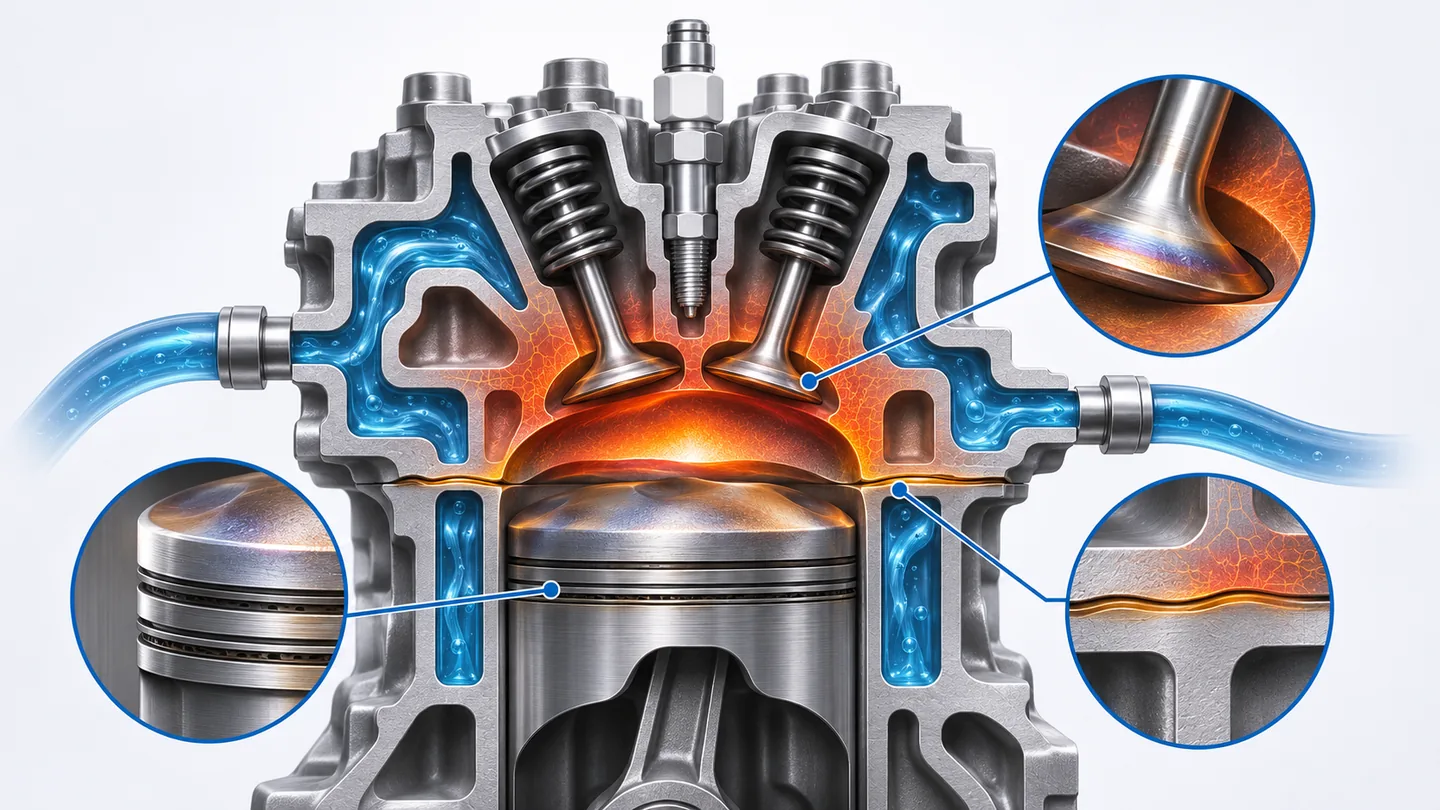
Depending on what happened, a garage can look for leaks and assess pressure retention, circulation and airflow. If there are signs that the cylinders and coolant circuit may be communicating, it can choose tests to investigate that possibility. A leaking gasket and a cracked head can look similar from outside. If removal is agreed, inspection may cover the gasket and both mating surfaces. The head may need to be measured for flatness or checked for leaks. Fel-Pro on head cracks and gasket failures · Fel-Pro on mating surfaces.
3. Tie the repair to the findings
If an external fault was found and there are no signs of internal damage, ask what checks support that conclusion. If there is internal damage, look for a quote that distinguishes restoring the damaged parts from correcting the original fault. After severe overheating, it can also make sense to check whether the rest of the engine is in good enough condition for a head-only repair.
See how we assess cooling faults, a head gasket fault or the cylinder head.