
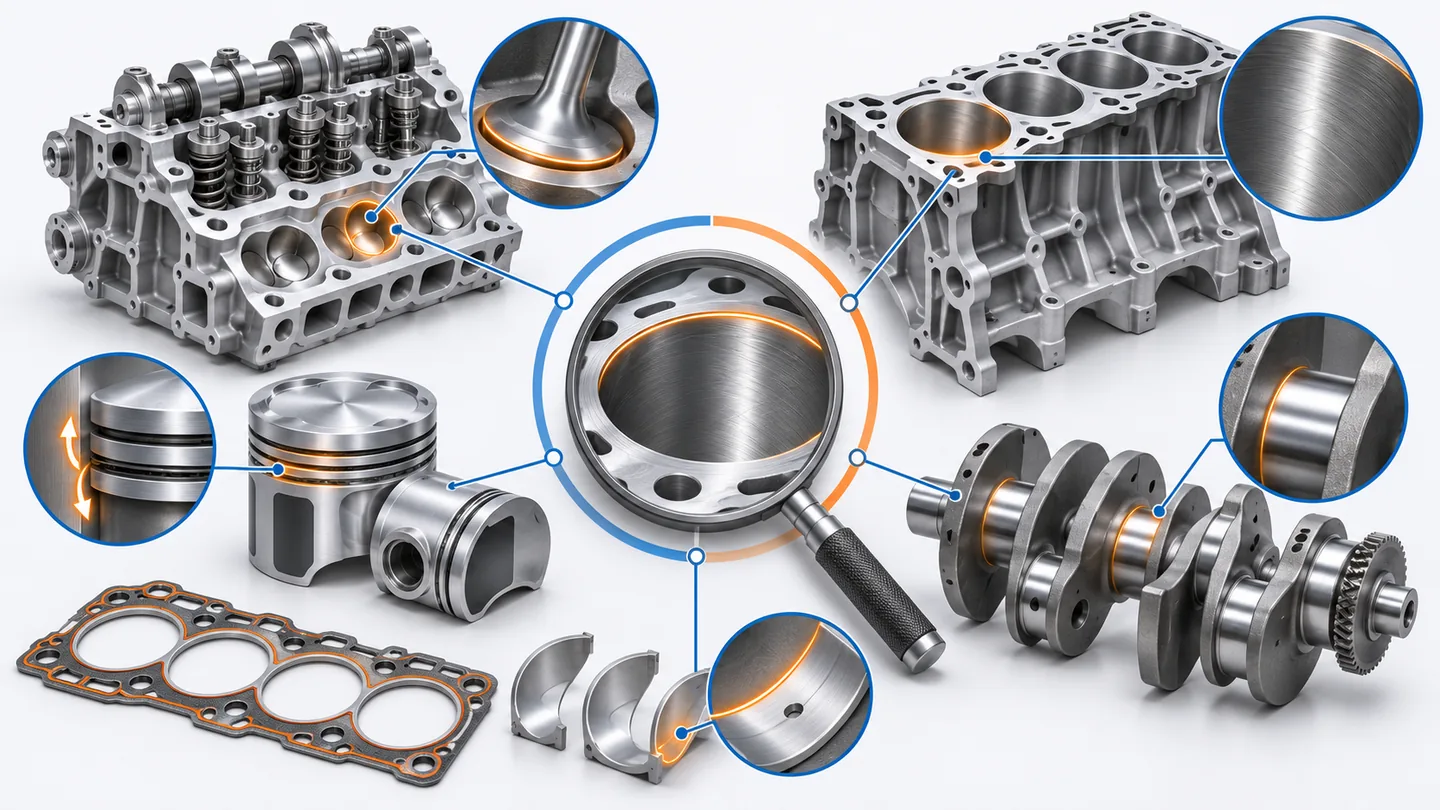
You often learn the most about the scope of a rebuild once the engine is apart. Similar symptoms can lead to quite different jobs. To understand a quote, look at the findings behind each decision, from stripping the engine down to checking it after assembly.
Dismantling: what failed first?
Compare the previous tests with the damage found inside. One part may have started the problem while another was damaged as a result. A bearing that has suffered from inadequate lubrication is a good example. Replacing it leaves the original issue unresolved if the cause lies in the oil supply or the loss of the protective oil film. MAHLE guide to bearing failure.
Measurement: which parts can go back in?
A workshop considers the condition and dimensions of the relevant bores, pistons, crankshaft and mating surfaces. The readings need to be checked against the specifications for that engine. The findings determine which parts are reusable, which may be recovered by an appropriate operation and which are unsuitable. New rings can still fail to seal against a distorted bore or in worn piston grooves. Motorservice guide to piston and cylinder damage.
Assembly and checks: what keeps the fault from returning?
The final scope should identify the parts being reused, the parts being replaced and the work agreed. A failure can leave debris in connected systems, for instance in the intake or oil circuit, so the job may extend to checks outside the rebuilt unit. Preparing the lubrication system and deciding which initial checks to make depend on the engine and the work carried out. Motorservice installation and initial start-up checklist.
What to ask when reviewing the work
Ask what was found after dismantling, which measurements affected the proposal and what was checked after assembly. Clarify any remaining work that affects whether the engine can go back into service. For your own engine, see rebuild assessment, engine machining and how we agree the work.