
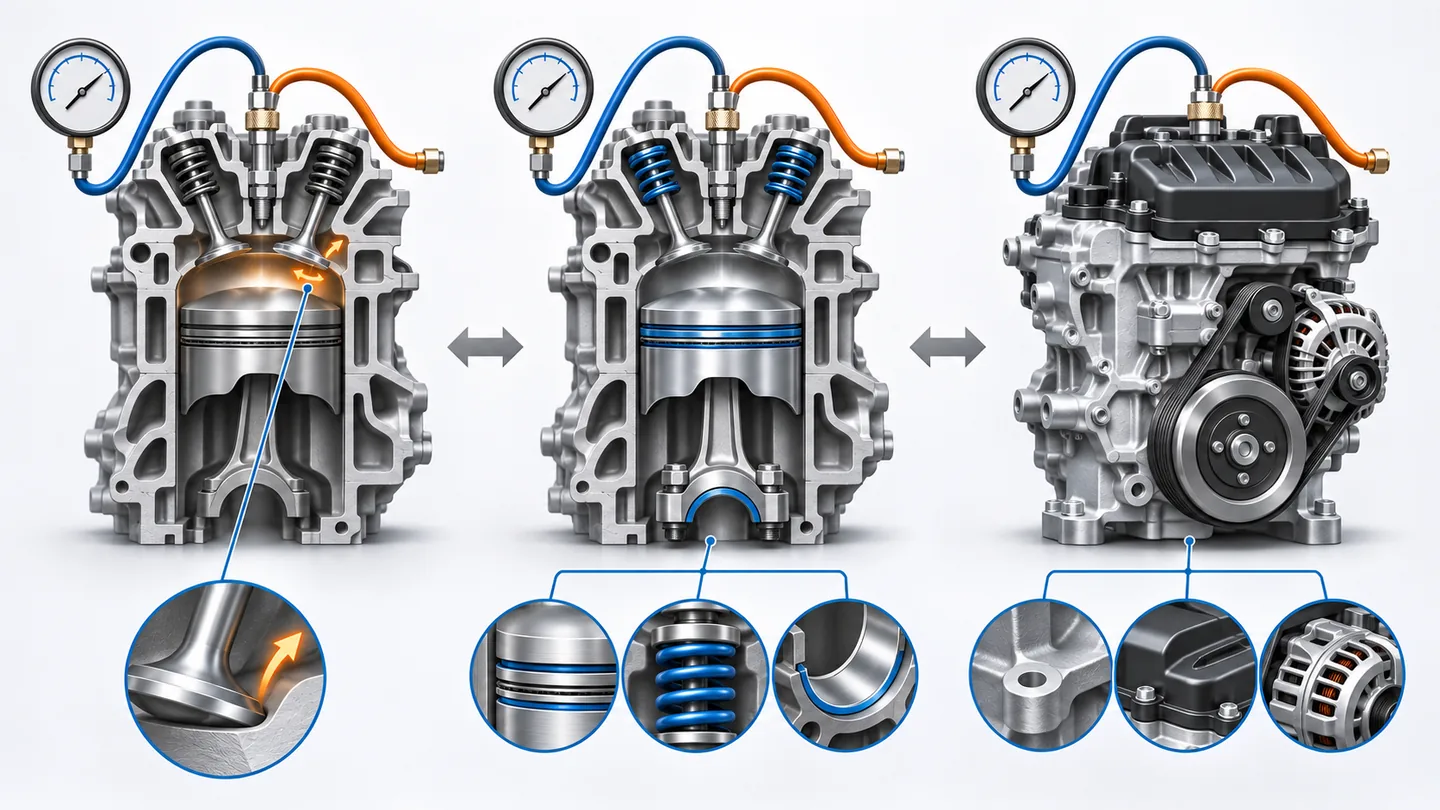
When you are weighing two quotes, first ask what each garage has established about the fault. A recommendation made before the engine is opened may change once parts have been inspected or measured. Ask which findings support the proposal and what would make the scope change.
What is each option meant to resolve?
- Repair a specific fault. This may be reasonable when the damage is localised and the rest of the engine is suitable for reuse. Ask which component failed and what was checked around it.
- Rebuild the original engine. This is worth considering when there is wear or damage in several places and the original unit can still be recovered. Ask what will be reused, what needs machining and what will be replaced.
- Fit a replacement engine. Consider this if the original unit cannot be recovered within its limits or if keeping it is hard to justify given the work involved. Ask about the condition of the replacement, how fitment will be checked and what installation covers.
An internal failure can leave a problem outside the unit itself, such as debris in the intake or oil circuit. Whether you rebuild or replace, ask how the original cause and any contamination will be dealt with. Motorservice’s installation and initial start-up guide.
Compare the same work on both quotes
Line up the work, parts and checks side by side. One quote may include removing the engine while another assumes it has already been removed. A replacement can also come with different components. Ford’s powertrain guide, for instance, distinguishes several build levels with different contents. It is an example of why you should ask for the contents of the specific quote. Ford engine build levels.
What to agree before work starts
Before approving, agree how extra work will be authorised, what will be checked at handover and what warranty is written down. See diagnostics, engine repair, rebuilding, replacement and our warranty information.