
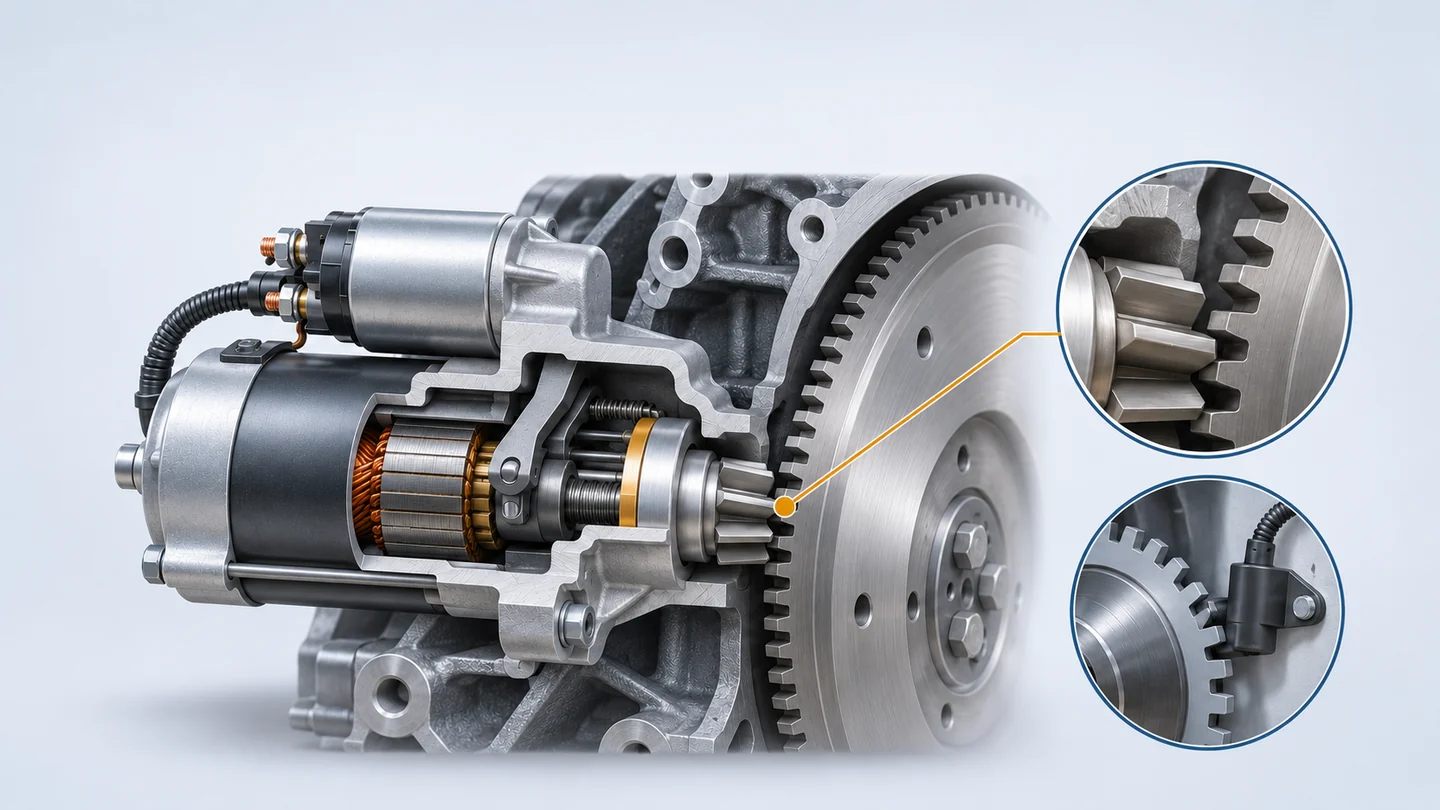
What happened when you tried to start it?
Start with the clearest description you can give: did the engine turn over without starting, was there a click, or was the attempt silent? The starter turns the engine during starting, so these observations describe different situations. If you are unsure which description fits, say so. Describe the attempt you already made; there is no need to reproduce it for your notes. The first useful question is what happened, before asking which part to buy.
What does cranking actually tell you?
An engine turning over without starting is an observation, not a diagnosis. It describes the engine being turned during the starting attempt, but does not establish why it failed to start. Keep that distinction in your conversation with the workshop. “It turned over but did not start” gives the specialist a clearer starting point than naming a suspected component. Ask how the workshop will assess that observation before agreeing to a particular explanation.
Does that mean the crankshaft sensor has failed?
The engine controller can use crankshaft speed and position information to time ignition and injection. That explains why this information may matter during a no-start investigation; it does not mean a failed starting attempt proves the sensor is faulty. If the crankshaft sensor is suggested as the cause, ask what evidence supports that suspicion. An engine specialist interprets the symptoms and stored data in context before checking a suspected component.
Could it be an ignition fault?
Ignition faults can cause an engine not to start, but that possibility does not identify a particular faulty part. A suggestion to replace an ignition coil therefore needs more support than the symptom alone. Ask what the workshop has observed, how any stored data relates to those observations, and what component checks are proposed. The useful explanation connects evidence to the suspected fault, while making clear which parts of the diagnosis remain uncertain.
What should you tell the workshop?
Prepare a short account of the starting attempt in your own words. Separate what you noticed from what someone has suggested: “the engine turned over” is an observation; “it needs a sensor” is a proposed explanation. If you have already received a diagnostic report, make it available and ask the specialist to explain its findings in context. You do not need to translate your experience into technical language or choose a component before requesting diagnostics.
What should be clear before parts are changed?
Before authorising replacement parts, ask for a plain explanation of the suspected cause, the evidence behind it and any uncertainty that remains. For a cranking no-start, neither the symptom itself nor the role of a component establishes that the component has failed. A workshop should interpret symptoms and stored data before checking the suspected part. Your practical next step is to request that assessment and understand its findings before deciding whether the proposed repair is justified.