
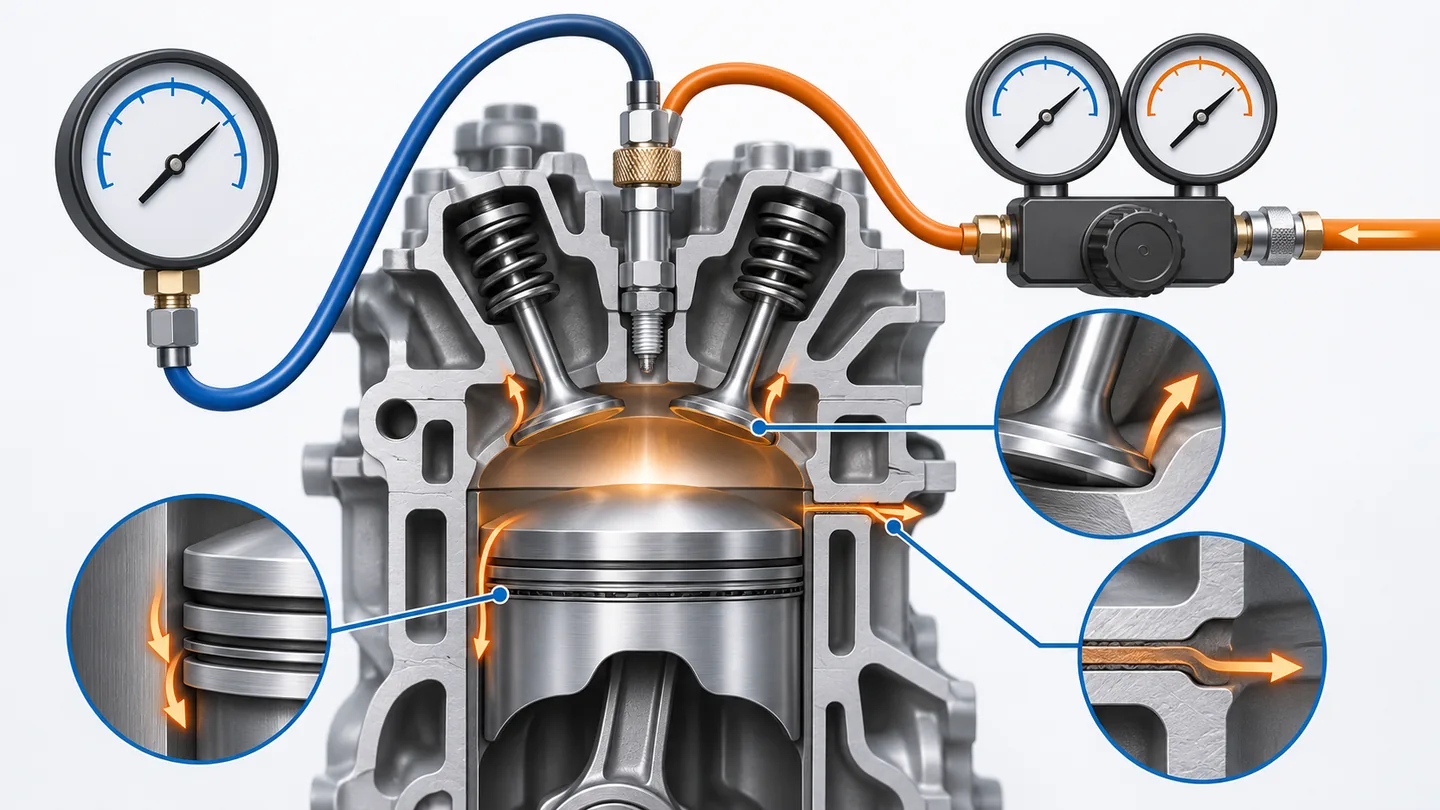
“Low compression” is a finding. To make sense of it, ask for the readings for each cylinder and an explanation of how the test was carried out. A compression test and a leak-down test look at related aspects of an engine, but their results answer different questions.
How much pressure did the cylinder build?
A compression test records the pressure a cylinder develops while the engine is turned over. Start with the specification for that engine and the spread across cylinders. Test conditions matter. For instance, a difference in cranking speed or temperature can make two sets of readings hard to compare. A low figure can tell the garage where to look, but it does not tell them which part needs replacing. OTC compression tester reference.
Where is pressure escaping?
A leak-down test looks for loss of air from a cylinder with its valves closed. Air heard at the intake or exhaust can point to valve sealing. Air getting into the crankcase can point to the rings or bore. If air reaches the cooling system, the gasket, head or block may need investigation. A leak-down percentage describes that particular test. It does not measure the percentage of cranking compression lost. Sealey cylinder leakage tester manual.
What to ask before deciding on a repair
Ask for the engine identification, the readings and units, the test conditions and the observations behind the garage’s conclusion. If two neighbouring cylinders read low, ask what else was checked before attributing it to a leak between them. If every cylinder reads low, ask whether the method and conditions allow a fair comparison with the manufacturer’s reference. A useful report makes clear which finding has been confirmed and what further checks could change the decision.
See our low compression guide and the engine diagnostics page if you already have results to discuss.